
-
Affiliates
How We Handle Playdates With Friends Who Parent Differently
When your toddler hands over a banana to a friend whose family only feeds organic home-cooked meals, or when another kid arrives clutching an iPad while yours has never seen one outside a waiting room, you quickly learn that playdates are more than just fun and games. They are tiny cultural exchanges where different household rules collide in real time.
In our house, the approach is pretty relaxed. Snacks happen on the couch, shoes come off at the entrance, and bedtime stories are non-negotiable. But every family runs on its own rhythm, and once you start mixing households, you realise just how much of parenting is invisible until someone else's child points it out.
This is something I have been thinking about a lot lately, especially after our own little crew grew. The dynamics shifted once we had a second child, and I found myself spending more time navigating other people's preferences than I ever imagined.
Why Every Family Brings Their Own Rulebook
There is no Australian standard-issue parenting manual, even if the big retailers like Big W and Target seem to think otherwise. Some households operate on a strict routine, others fly by the seat of their pants, and most sit somewhere comfortably in the middle.
What matters, I have found, is not whether the rulebook matches yours but whether the adults involved are willing to discuss it openly. A quick text before the kids arrive usually saves a lot of awkwardness later. Things like "we don't do juice boxes" or "they're allowed one episode" can be mentioned casually and prevent a meltdown from either child.
It also helps to remember that parenting styles often reflect circumstance as much as philosophy. A family in Melbourne juggling two full-time careers and a long commute to childcare might lean heavily on screen time purely as a survival tool, while a stay-at-home parent in a regional town may simply have more hours in the day for hands-on play. Neither is wrong.
The Screen Time Standoff
This is the one that catches me off guard every single time. My kids get very little structured screen time at home, mostly because I find it makes my eldest melt down faster than a melted Zooper Dooper in a Brisbane summer. But the moment a playmate pulls out a tablet, the magnetic pull is unreal.
Rather than policing what happens at someone else's house, I treat these moments as gentle exposure. If my child watches a show at a friend's place, we talk about it on the drive home, and the next morning it is back to normal. No drama, no lectures, no quiet judgment over a coffee at the local café.
When the situation is reversed and my child is hosting, I give the visiting family a heads-up. A simple "we don't have the TV on during playdates" sets the tone without sounding precious, and most parents genuinely appreciate knowing where they stand.
Food Rules, Treats and Snack Diplomacy
Food is a minefield. One family I know in Adelaide keeps a completely nut-free home because of a sibling allergy, another friend in Perth swears by Vegemite on everything, and a third family runs a fully vegan household. All three of those children play together regularly, which means snack time requires a bit of diplomacy.
I keep a small stash of safe options in the pantry for guests. Plain rice crackers, fruit, and the occasional plain biscuit tend to work across most dietary lines. If we are heading to someone else's house, I usually pack a snack just in case, especially since the kids often arrive hangry after school pickup.
For parties and bigger gatherings, the same applies. When my eldest recently attended a birthday at a local park in our suburb, I sent along a little container of food I knew she would eat. The host family was completely relaxed about it, and nobody spent the afternoon policing sugar highs. It is about being considerate without being precious.
Discipline and Behaviour Boundaries
This is where things can get tense if you do not set expectations early. Some families time out, others use calm-down corners, and a few are firmly in the natural consequences camp. None of these approaches are right or wrong, but they rarely mix well mid-afternoon.
If a situation starts to escalate between children, I tend to default to whichever style is closest to what the host family uses. When my kids are at a friend's house, the adults there get to lead. The same applies when their children visit us, and most parents seem genuinely grateful for that unspoken agreement.
We have had the occasional awkward moment, including one playdate where the host's no-hitting rule clashed with my toddler's enthusiastic high-fives. A quick conversation afterwards cleared the air and, honestly, taught me to be more specific when I describe my kids' personalities to other parents.
Building Flexibility Without Losing Your Values
Over time, I have noticed that our household has become a little more flexible and a little less rigid. The kids have learned that different houses have different rules, and honestly, that is a useful life skill long before they hit the school playground in Year 1.
We still hold firm on the things that matter to us, like respectful language and basic manners, but small things like bedtime flexibility or extra treats at a friend's place have become areas where we bend. It does not feel like compromise. It feels like teaching our children that the world is bigger than our living room.
If you are early in this journey, give yourself permission to feel a bit awkward. Playdate parenting is rarely discussed openly, but almost every family is navigating it in some form, whether they are in Sydney, Hobart, or somewhere in between.
Habits That Help Us Stay Flexible
- Send a quick text before drop-off asking about any allergies, screen rules or snacks to avoid.
- Pack a familiar snack or drink so your child has a backup if nothing feels right.
- Choose your non-negotiables ahead of time, like car seat safety or seatbelts, and hold the line there.
- Debrief gently on the drive home rather than interrogating every choice.
- Remember that other parents are also doing their best, and grace goes a long way.
If your family is growing and the playdate chaos feels like it is multiplying, I wrote a bit about transitioning to two kids that walks through the small shifts that happen when your household expands. A few of those lessons apply just as much to hosting other people's children as they do to managing your own. Pull up a cuppa, settle in, and know that you are not the only one quietly recalibrating every other weekend.


 Durex House Party “He Said/She Said” Challenge [Giveaway]
![Durex House Party: Introducing the LOVE BOX [Giveaway]](/wp-content/uploads/HLIC/2ed7178346e419ad5c79280a7d5dd0aa.png) Durex House Party: Introducing the LOVE BOX [Giveaway]
Durex House Party: Introducing the LOVE BOX [Giveaway]
![Welcome to the Durex House Party [Giveaway]](/wp-content/uploads/HLIC/b3517de65f98905a68b0497aa5152005.png) Welcome to the Durex House Party [Giveaway]
Welcome to the Durex House Party [Giveaway]
 Nursing Scrubs
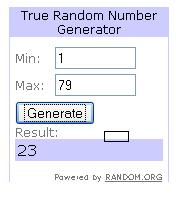 Purex Complete Crystals Winner