
-
Affiliates
Why We Stopped Using Time-Outs And What We Do Instead
Time-outs were once a familiar part of my parenting toolkit. When one of my children yelled, refused to listen, or pushed a sibling, I would send them to a chair or a quiet corner and expect a few minutes alone to reset the behaviour.
Over time, though, the routine began to feel disconnected from what was actually happening. My child might sit still, but the original problem was rarely understood. I was getting compliance for a short while without teaching the skills needed for the next argument, rushed school morning, or supermarket meltdown.
Parenting in a busy family means making changes when something no longer fits. Between work, school runs, after-school activities and the ordinary noise of family life, I wanted discipline to be practical, respectful and effective rather than another battle to win.
We stopped using time-outs and started focusing on connection, boundaries and repair. This does not mean allowing unsafe or disrespectful behaviour. It means responding in a way that helps children learn what to do with big feelings, poor choices and conflict.
The Problem With Traditional Time-Outs
A time-out can stop a behaviour in the moment, especially when a parent needs a pause. The difficulty is that children often experience it as rejection or isolation rather than a lesson. A young child may think, “I am bad,” instead of understanding, “That action hurt someone, and I need to make it right.”
Time-outs can also become a power struggle. The child refuses to sit, the parent repeats the instruction, and soon the original issue is buried under arguments about the chair, the timer and whether the minutes have been served. That cycle was familiar in our house, particularly when everyone was already tired.
This does not mean every child reacts to separation in the same way. Some children genuinely enjoy quiet space. The important distinction is whether the space is offered as support or imposed as punishment.
We Separate The Child From The Behaviour
Our language changed first. Instead of saying, “You are being naughty,” we name the action: “I won’t let you hit,” or “The blocks are not for throwing at people.” This keeps the boundary clear without attaching a negative identity to the child.
If someone is unsafe, I step in physically and calmly. I move the toy, create distance between siblings, or hold a little hand away from a bite or hit. Safety comes before discussion, and nobody is expected to reason perfectly while overwhelmed.
Once the immediate danger has passed, I keep my words short. A long lecture rarely works when a child is crying, shouting or hiding under the table. The goal is to settle the nervous system first and talk about the choice later.
Connection Comes Before Correction
“Come sit with me” replaced “Go sit over there.” Sometimes we cuddle, breathe slowly, or simply stay nearby without demanding eye contact. This is not rewarding the behaviour; it is helping the child become calm enough to learn from it.
I have also learned to regulate myself before trying to regulate anyone else. A low voice and slower movements make a difference, even when I am frustrated. If I need a minute, I say, “I am too cross to solve this well. I am going to take a short break and come back.”
That model matters. Children see that taking space can be responsible rather than shameful. In a household shaped by busy Sydney commutes, school bags and dinner deadlines, a brief pause can prevent a small problem becoming a full family explosion.
Practical Alternatives We Use At Home
Our alternatives depend on the child, the behaviour and the moment. A toddler may need redirection, while an older child may be ready to discuss consequences. I try to choose a response that connects directly to what happened instead of adding an unrelated punishment.
| What happened | Our response | Skill being practised |
|---|---|---|
| A toy was thrown | The toy is put away, then we check whether anyone is hurt | Safety and accountability |
| Siblings argued over a game | We separate briefly and help them take turns explaining | Listening and problem-solving |
| Someone hit or pushed | I block the action, comfort the injured child and support an apology or repair | Boundaries and empathy |
| A child is overwhelmed | We use a calm corner, water, breathing or quiet company | Self-regulation |
| A routine is refused | I offer two realistic choices and follow through calmly | Cooperation and responsibility |
A calm corner is different from a punishment corner. Ours has cushions, books and a few sensory items, and anyone in the family can use it. I might say, “Your body looks too full of angry feelings. We can sit here together,” rather than sending a child away.
Natural consequences are useful too. If textas are used on the wall, we clean the wall together. If a child tips out every puzzle during a rushed morning, the puzzle is packed away until there is time to use it safely. The consequence is predictable and related to the action.
Teaching Repair After Conflict
An apology is more meaningful when a child understands what they are apologising for. I avoid forcing a quick “sorry” while emotions are still boiling. Instead, we might practise: “I pushed you. That hurt. I will give you space and ask before taking the toy.”
Repair can include getting an ice pack, rebuilding a tower, returning an object or helping clean up. These actions show that relationships can recover after mistakes. They also give children something practical to do with guilt, rather than leaving them stuck in shame.
We talk about impact without turning the conversation into a courtroom. The child’s feelings may explain the action, but they do not excuse hurting someone. “You were angry because your brother took the truck, and hitting was not safe” can hold both truths.
Routines Make Discipline Easier
Many behaviour problems are predictable signs of hunger, tiredness or too many transitions. Australian families know the late-afternoon stretch well: school pickup, a hot car, sport practice, homework and the question of what can be made quickly with groceries from Coles or Woolworths.
I now try to prevent some flashpoints. Snacks travel in my bag, instructions are given before we leave the park, and I use visual reminders for morning jobs. We also keep expectations realistic during heatwaves, long travel days and the end of the school term.
Budgeting is part of this because stress affects everyone. Planning inexpensive meals and keeping a little flexibility in the week helps me avoid treating every inconvenience as disobedience. I find useful ideas through budget-friendly family inspiration when I need to make ordinary resources stretch further.
Responding To Different Ages And Personalities
A strategy that works for a preschooler may frustrate a primary-school child. Younger children need concrete choices and help naming feelings. Older children can participate in family agreements, suggest fair consequences and take more responsibility for repairing harm.
Temperament matters too. One child may calm with a hug, while another needs a little physical space. Some children talk immediately; others need drawing, movement or a snack before they can explain what happened. Respecting those differences has made our discipline less rigid.
I also keep an eye on my own assumptions. A child who is quiet is not automatically coping, and a child who cries loudly is not necessarily being manipulative. If behaviour is persistent, extreme or affecting school and relationships, I seek advice from a GP, child health nurse or another qualified professional.
Making Room For Firm Boundaries
Gentle parenting is sometimes misunderstood as never saying no. In our home, there are firm limits around hitting, cruelty, unsafe climbing, damaging property and bullying. The difference is that the limit is enforced without humiliation, threats or isolation.
Australian government schools do not permit corporal punishment, and laws about physical punishment at home vary between states and territories. For us, that reinforces the value of non-physical discipline: clear boundaries, supervision, calm intervention and teaching better choices.
Parenting tools also change as children grow. My work experiences, including the practical perspective behind my nursing scrubs story, have reminded me that care is often about preparation, observation and responding to the person in front of you. The same is true at home.
The biggest shift has been accepting that discipline is a long lesson, not a single dramatic consequence. We still have loud days, sibling arguments and moments when I respond less calmly than I hoped. We reset, reconnect and try again.
For families exploring a calmer approach, start with one repeated conflict. Decide on the safety boundary, the words you will use and the repair that can follow. If everyday routines are part of the struggle, my kids’ water bottle review is a reminder that small practical choices can support smoother days too. Progress comes from consistent, ordinary responses rather than perfect parenting.


 Durex House Party “He Said/She Said” Challenge [Giveaway]
![Durex House Party: Introducing the LOVE BOX [Giveaway]](/wp-content/uploads/HLIC/2ed7178346e419ad5c79280a7d5dd0aa.png) Durex House Party: Introducing the LOVE BOX [Giveaway]
Durex House Party: Introducing the LOVE BOX [Giveaway]
![Welcome to the Durex House Party [Giveaway]](/wp-content/uploads/HLIC/b3517de65f98905a68b0497aa5152005.png) Welcome to the Durex House Party [Giveaway]
Welcome to the Durex House Party [Giveaway]
 Nursing Scrubs
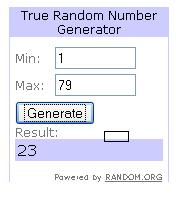 Purex Complete Crystals Winner