
-
Affiliates
How a Family Gratitude Jar Changed Our Everyday Life
Some family traditions begin with a carefully planned craft project, while others appear because everyone needs a little reset. Our gratitude jar started during a particularly busy stretch when school notes, work deadlines, grocery bills and sibling disagreements seemed to fill every day. We wanted to make room for the good things that were easy to overlook.
The idea was simple: each person could write down something they appreciated, fold the note and place it in a glass jar. There were no rules about making the answer profound. A warm sausage roll from the bakery, a funny thing someone said at dinner or a smooth drive through Melbourne traffic all counted.
Finding a small way to slow down
Family life can feel very full, especially when the week includes school drop-offs, after-school activities, packed lunches and the commute into the city. By the end of the day, it was tempting to focus on what had gone wrong. Someone had lost a shoe, forgotten homework or complained about dinner, and those moments could overshadow everything that had gone well.
The jar gave us a physical reminder to pause. We kept it on the kitchen bench beside the fruit bowl, where nobody could miss it. Writing a note took less than a minute, but that brief pause changed the tone of the evening. Instead of rushing straight from one task to the next, we had a small family ritual that encouraged us to notice ordinary joys.
Making gratitude work for children
I did not want this to become another parenting task that required perfect consistency. The children were allowed to write, draw pictures or ask for help with spelling. Younger children can find “What are you grateful for?” a little abstract, so we offered prompts such as a favourite meal, a kind friend, a funny moment or something they enjoyed at school.
The answers were wonderfully varied. One note celebrated a new library book, another mentioned a dog seen on the walk home and one simply said “Mum’s pancakes”. The children also learned that gratitude does not have to mean pretending everything is fine. They could have a difficult day and still identify one comforting, amusing or encouraging moment.
That flexibility made the jar feel inclusive rather than instructional. It worked for the adults, too. Some evenings I wrote about a quiet cup of tea, finding a parking spot near the shops or receiving a thoughtful message from a friend. Small comforts matter when the household budget is tight and everyone is tired.
The community around our family
Starting the jar also reminded me how important supportive people are when raising children. Parenting in a city can be surprisingly isolating, even when surrounded by neighbours, school families and busy streets. It helped to read about finding a supportive mum group and to recognise that many parents are looking for the same sense of connection.
Our gratitude notes began to include the wider village around us. We wrote about a teacher who noticed a child was having a hard day, a neighbour who collected a parcel and friends who made space for a last-minute visit. In Australia, practical kindness often appears in simple forms: a school run shared between families, a cuppa offered after sport or someone dropping off dinner when the week has become too much.
The jar did not replace real support, but it helped us see it more clearly. We became more likely to thank people directly, send a message or acknowledge the effort behind everyday acts of care.
Opening the notes at the end of the year
For several months, the notes collected quietly. We added them after dinner, before bed or whenever somebody remembered. We did not read them every night because the ritual was meant to be manageable. At the end of the year, we tipped them onto the table and made an afternoon of reading them together.
There were plenty of laughs. Some notes were difficult to decipher, a few had spelling mistakes and several referred to events we had completely forgotten. The children enjoyed guessing who had written each one. A note about a beach visit brought back memories of hot sand, icy drinks and trying to keep track of everyone near the water.
The collection also showed us how much had happened during an ordinary year. There were mentions of birthdays, weekend trips, school achievements, family movie nights and visits to local markets. Even expensive outings were not always the highlights. Often, the favourite memories involved free activities, homemade food and time together.
What changed after the jar was full
The biggest change was not that our family became cheerful every minute. We still had arguments, rushed mornings and days when the laundry seemed endless. The difference was that we had developed a habit of looking for balance. A frustrating moment no longer had to define the entire day.
The children started pointing out good moments without being prompted. Someone would notice a beautiful sunset over the suburbs, a kookaburra in the backyard or the relief of cool weather after a run of hot days. These observations became part of our conversations, even when there was no paper nearby.
We also became more deliberate about celebrating affordable pleasures. A walk through the neighbourhood, a picnic at the park or a visit to the local library could feel like a proper family outing. With the cost of groceries, fuel and activities continuing to influence household decisions, it was reassuring to remember that connection did not need a large budget.
The gratitude jar is still on the bench, although we use it in a more relaxed way now. Some weeks it fills quickly; other weeks only one or two notes appear. That is fine. Its value was never in producing a perfect record of happiness. It gave us a simple way to pay attention, appreciate one another and hold onto the moments that might otherwise disappear into the rush.
Start with any clean jar, a handful of scraps of paper and a pen. Place it somewhere visible, invite everyone to contribute in their own way and read the notes whenever your family needs a reminder of the good already surrounding you.


 Durex House Party “He Said/She Said” Challenge [Giveaway]
![Durex House Party: Introducing the LOVE BOX [Giveaway]](/wp-content/uploads/HLIC/2ed7178346e419ad5c79280a7d5dd0aa.png) Durex House Party: Introducing the LOVE BOX [Giveaway]
Durex House Party: Introducing the LOVE BOX [Giveaway]
![Welcome to the Durex House Party [Giveaway]](/wp-content/uploads/HLIC/b3517de65f98905a68b0497aa5152005.png) Welcome to the Durex House Party [Giveaway]
Welcome to the Durex House Party [Giveaway]
 Nursing Scrubs
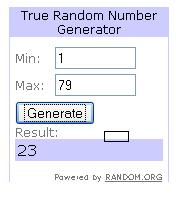 Purex Complete Crystals Winner