
-
Affiliates
Why we let our kids get bored on purpose
Parenting in 2025 feels like a competition no one signed up for. Every arvo seems to come with another invitation for a birthday party, another extracurricular, another craft kit promising to turn your toddler into the next Picasso. We've fallen into a rhythm of filling every gap in our kids' days with activities, classes, and screen time, convinced that boredom is something to be avoided at all costs. After years of running on that hamster wheel, we decided to hit the brakes.
Our house rules now include a generous portion of unstructured time, and yes, that means our kids complain. A lot. But somewhere between the whinges about having nothing to do and the slow discovery that the back verandah is actually pretty interesting, something shifted. Letting our kids get bored on purpose has become one of the most powerful parenting tools in our kit.
The trap of constant stimulation
It started with good intentions. We wanted our kids to be well-rounded, to try everything, to never miss an opportunity. Before long, the calendar looked like a game of Tetris designed by someone who'd had too much coffee. Swimming on Tuesdays, soccer on Wednesdays, music on Fridays. Weekends were for visiting the grandparents, the footy, and the obligatory trip to Bunnings for a snag and a wander through the garden centre.
The cracks appeared slowly. Bedtime became a battle. The kids couldn't settle. They couldn't entertain themselves for ten minutes without reaching for a tablet or asking what was for brekkie. We'd inadvertently built little humans who couldn't cope with a quiet moment. That's when we knew something had to give.
What boredom actually does to a brain
Neuroscience backs what our grandparents knew instinctively. When kids aren't given external entertainment, their brains switch into something called default mode networking. It's the state where creativity, problem-solving, and self-reflection actually happen. Without it, kids stay stuck in consumer mode, always waiting for the next thing to be handed to them.
We've watched our own kids start to invent games out of nothing. Sticks become wands. The trampoline becomes a pirate ship. The dog becomes a character in an elaborate saga that lasts most of the arvo. None of this would have happened if we'd tossed them a tablet at the first sign of restlessness. They needed that empty space to fill themselves.
Setting boundaries without becoming a pushover
Letting kids be bored doesn't mean abandoning them to stare at the ceiling. It means holding firm when the inevitable complaints arrive. Our rule is simple: screens require an activity first. If the kids say they're bored, we suggest a handful of options and then leave them to it. We don't rescue them, and we don't feel guilty about it.
The first few weeks were rough. There were tears, accusations of being the meanest mum in the whole suburb, and at least one dramatic flop onto the loungeroom floor. But kids are remarkably adaptable when adults stay consistent. After a while, they stopped asking and started creating. Now their go-to boredom buster is usually something involving the backyard, the dog, or an elaborate imaginary world built in the cubby house.
The pushback from other parents
Not everyone gets it. Some mates think we're being lazy, or worse, neglectful. We've had the side-eye at school pickup when our kids mention they had nothing to do on the weekend. There's a quiet pressure in Australian parenting culture to keep kids busy, productive, and visibly enriched. Saying no to that feels countercultural.
We've learned to be politely vague about our weekends and to remember that every family makes different choices. Some parents need the structure for sanity reasons, and that's completely fair. We just know what works in our house, and we stick to it.
What we've noticed six months in
The differences are subtle but real. Our kids play independently for longer stretches. They negotiate with each other instead of immediately coming to us for entertainment. They sleep better. They whinge less about being bored, which is honestly the biggest win. The house is louder, messier, and full of elaborate storylines involving the cat as a secret agent.
We've also noticed they cope better with the boring bits of life itself. Waiting at the dentist. Sitting through an adult dinner. Long drives to visit rellies in the bush. Boredom has become a muscle they can flex, and it serves them well beyond the loungeroom.
| Boredom-friendly activity | What it teaches | Setup needed |
|---|---|---|
| Cardboard box fort building | Spatial thinking, cooperation | A few boxes, some tape |
| Backyard "restaurant" with real menus | Literacy, role play, maths | Paper, pencils, the esky |
| Mud kitchen in the garden | Sensory play, science basics | Old pots, dirt, water |
| Inventing a new game with siblings | Negotiation, rule-making, creativity | Just siblings and imagination |
| Drawing a map of the neighbourhood | Observation, geography, planning | Paper and coloured pencils |
Practical tips for families giving boredom a go
- Start small with fifteen-minute windows before lunch and build from there
- Keep a "boredom jar" with prompts like "build something" or "write a song" for stuck moments
- Resist the urge to suggest the tablet when complaints start, even when it's easier
- Let siblings work it out together rather than stepping in as referee
- Accept that the mess is part of the process and keep the mop close
If you're curious about how we think about choice, chance, and decision-making in our family, you can read more in our casino fairness policy. It might sound random, but the same principle of transparency and intentionality applies to how we parent. We try to be open about why we do what we do, even when it goes against the grain.
Screens still happen in our house, and we're not raising them in a bubble. But the default has shifted. Boredom is no longer the enemy. It's become the starting point for some of the best parts of our kids' childhoods, and frankly, for ours too. Give it a go this weekend, even if it's just for an hour. You might be surprised at what your kids come up with when you stop filling the gaps for them.


 Durex House Party “He Said/She Said” Challenge [Giveaway]
![Durex House Party: Introducing the LOVE BOX [Giveaway]](/wp-content/uploads/HLIC/2ed7178346e419ad5c79280a7d5dd0aa.png) Durex House Party: Introducing the LOVE BOX [Giveaway]
Durex House Party: Introducing the LOVE BOX [Giveaway]
![Welcome to the Durex House Party [Giveaway]](/wp-content/uploads/HLIC/b3517de65f98905a68b0497aa5152005.png) Welcome to the Durex House Party [Giveaway]
Welcome to the Durex House Party [Giveaway]
 Nursing Scrubs
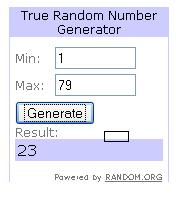 Purex Complete Crystals Winner