
-
Affiliates
Why Our Family Skips the Kids Comparison Game
Every family gathering in our household eventually drifts towards the same awkward moment. Someone asks how our children are tracking against their cousins, or mentions a friend's kid who started reading at four. I used to laugh along, but inside my stomach would drop. Comparing children felt like a quiet cruelty dressed as conversation, and I wanted no part of it. So we made a conscious decision to step away from that whole family pattern, and the difference it has made for our kids has been enormous.
It is not that we ignore development or pretend milestones do not matter. We celebrate our children when they learn something new, and we support them through struggles. We just refuse to use other kids as a yardstick. Once you start measuring your child against a cousin or a classmate, you lose sight of who they actually are. You start parenting a version of someone else's child instead of your own, and that path leads nowhere good.
Australia is a country obsessed with friendly one-upmanship, whether it is around the barbie, at the school gate, or in the queue at Bunnings on a Saturday morning. People swap stories about who is walking first, who has lost their first tooth, and whose five-year-old just signed up for Auskick. The pressure to perform is real, and it sneaks in through casual comments more than grand announcements. That is why setting a clear boundary early has saved us from a lot of unnecessary stress.
The Damage Done by Casual Comparisons
Children are sponges, and they absorb far more than adults realise. When a parent sighs and says, "Your cousin is already doing that," a child hears something entirely different. They hear that they are behind, that they are not enough, and that love might shift if they do not catch up. Research out of the Australian Council for Educational Research has long shown that self-esteem formed in the early years shapes how kids handle challenge well beyond the playground years.
Comparison also damages the relationship between cousins and friends. Two siblings who would have happily played together suddenly become rivals in a race nobody signed up for. I have watched birthday parties turn tense because adults could not resist dropping comments about school performance or swimming lessons. Our rule became simple: speak about our own children with warmth, and let other families do the same without our public version.
The comparison habit also leaks into how we view our own parenting. You start wondering if you should be doing more, buying more, enrolling them earlier. Before long you are spending a fortune on tutoring or weekend clinics just to keep up with someone else's training the kids program. None of it actually helps your child, and most of it just burns out the whole family.
Letting Each Child Set Their Own Pace
Every child blooms on their own timeline, and pretending otherwise does nothing useful. Our oldest was speaking in full sentences before her second birthday, while her younger brother was happy pointing at himself and shrieking for another arvo at the beach. Different rhythms, same household, zero need to panic about either.
Australian schools recognise this too. Modern early learning frameworks, like the Early Years Learning Framework used widely across the country, focus on individual growth rather than ticking boxes against peers. Teachers track progress, but they do it against the child's own journey, not against the cohort. If the system can honour that, surely we can do the same at home during after-school chats in the ute on the drive home.
We talk openly about effort instead of outcome. If our daughter nails a reading level we praise the hours she put in, not where she sits on some imaginary class ladder. If a cousin happens to learn faster, that is their story, not ours. Keeping stories separate keeps siblings close, and it keeps cousins close too.
What We Say Instead of Comparisons
When grandparents or well-meaning relatives start the "so-and-so can already do this" chat, we gently redirect. We might say something like, "She is working on that in her own way," or "He will get there when he is ready." Sometimes we simply change the topic and ask about their garden, their footy team, or their plans for the long weekend. Most people get the hint quickly, especially once you do it a few times.
We also make a point of celebrating what makes each child unique. Our middle child is the artist, painting murals on the back fence with whatever washable paint she can find. Our youngest is the negotiator, bargaining for extra screentime with the skill of a well-paid lawyer. Neither of those things can be measured against another kid, and that is exactly the point. Identity built on comparison is fragile, while identity built on curiosity is rock solid.
It helps to remember that what every family remembers is the everyday stuff, not the milestones other people bragged about. No one looks back decades, and decades later and thinks, "Thank goodness our kid walked at ten months." They remember the laughter, the road trips, the burnt sausages at Bunnings, and the small weird moments that made childhood magical.
Protecting Kids from the School Gate Pressure
The school gate in any city, from London to London, is a hotbed of competitive parenting. Drop-off line conversations can feel like a friendly dinner party that is actually a job interview. People casually mention tutoring, music programs, summer holidays spent at tutoring, and the way their child won the alphabet before the alphabet could even be won. It is exhausting, and it is not actually helpful.
I have learned to keep my responses short and warm. When someone shares their child's achievement, I smile, say something kind, and ask about their weekend plans. I do not volunteer my own children's progress as a counter, and I do not pretend to be impressed by what they win. Comparison thrives on engagement, so I simply disengage with grace.
If you want a great reminder of how to stay grounded, this old post of mine called Valentine's Day is Almost Here is a reminder that writing yourself a reminder about love in your own home is more rewarding than measuring others.
Building Confidence That Lasts
Children who grow up free from comparison develop what researchers call a growth mindset. They believe they can improve through practice, and they see setbacks as part of learning. Kids who are constantly measured against others develop a fixed mindset, where talent feels like a finite gift they may possess or lack. Which child would you rather be raising? The answer is obvious.
The confidence that comes from this approach shows up everywhere. Our kids are willing to try new things, from messy hobbies to fancy footwork in their first dance class. They are not afraid of failure, because failure at home is met with "What did you learn?" rather than "Why aren't you as good as your cousin?" That shift alone has been worth every awkward conversation we have had to navigate with relatives and friends.
Encouraging Cousins to Be Friends, Not Rivals
The final piece of the puzzle is the relationship itself. Cousins can be some of the most important relationships in a child's life, especially in a country where families are often spread across suburbs and states. We want our kids to see their cousins as allies, playmates, and mates, not as competitors for adult approval.
We plan playdates, joint holidays, and shared adventures that have nothing to do with achievement. Last Christmas we took the whole extended family to a coastal town where the kids spent three days building forts out of driftwood and arguing over who got the bigger hidden cave. Nobody mentioned school, nobody mentioned sport, and nobody came home feeling like they had lost a race they never wanted to run.
If you are looking for practical ways to keep family bonds strong without the comparison crash, I have found great value in budgeting tricks and lifestyle hacks from Nugget on a Budget, where the focus stays firmly on family fun rather than family flexing.
If this approach speaks to you, stick around and explore more of the stories here. Subscribe to the blog, share it with a friend who needs to hear this message, and drop a comment below with your own family's approach to keeping comparison out of childhood. The more families who speak up, the lighter the load becomes for every kid in the family, and that is a future worth building.


 Durex House Party “He Said/She Said” Challenge [Giveaway]
![Durex House Party: Introducing the LOVE BOX [Giveaway]](/wp-content/uploads/HLIC/2ed7178346e419ad5c79280a7d5dd0aa.png) Durex House Party: Introducing the LOVE BOX [Giveaway]
Durex House Party: Introducing the LOVE BOX [Giveaway]
![Welcome to the Durex House Party [Giveaway]](/wp-content/uploads/HLIC/b3517de65f98905a68b0497aa5152005.png) Welcome to the Durex House Party [Giveaway]
Welcome to the Durex House Party [Giveaway]
 Nursing Scrubs
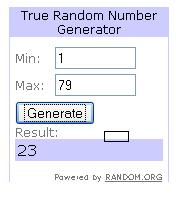 Purex Complete Crystals Winner