
-
Affiliates
The surprising upside of raising a baby in a tiny Australian apartment
When I told my partner we were expecting, his mother in Adelaide rang within the hour with one sharp question: where will the baby sleep? She pictured her grandchild crawling through sprawling hallways, not navigating the narrow corridor between our bedroom and the living room in our two-bedroom unit in Sydney's Inner West. Like many Australians priced out of the property market, we'd chosen compact inner-city living for the lifestyle, not the square footage. Everyone assumed a baby would force a tree change.
What nobody warned us about, and what I now consider the greatest gift of our tiny home, is how the walls seemed to dissolve the distance between us and our daughter. Within weeks of bringing her home, the layout that once felt cramped became the architecture of constant connection. Every cry was heard, every sleepy wiggle witnessed, every gurgle shared without crossing a hallway. The benefit we stumbled into wasn't convenience. It was intimacy we didn't know we were missing.
The space myth that won't quit
Australian parenting forums are full of threads asking how many square metres a baby needs. The answer, according to every sleep consultant and childhood development guide I've read, is far less than the marketing of oversized family homes suggests. Babies don't care about walk-in robes or double garages. They care about being close to the people who love them.
In cities like Melbourne and Brisbane, where median rents for family-sized homes have climbed into territory requiring dual six-figure incomes, small apartments aren't just a lifestyle choice. They're the realistic option for young families. Our two-bedroom unit in Marrickville costs roughly $450 a week less than a comparable townhouse in the outer suburbs. That money now flows into our daughter's education fund rather than a landlord's mortgage.
| Factor | Small apartment | Family house |
|---|---|---|
| Weekly rent in Sydney | $600–$750 for a 2-bed unit | $1,100+ for a 3-bed house |
| Weekly cleaning time | 2–3 hours | 6–10 hours |
| Night feed response time | Under one minute | Several minutes |
| Bonding intensity | High and constant | Scheduled and intentional |
| Storage approach | Vertical, multi-functional | Horizontal, dedicated rooms |
| Maintenance burden | Minimal | Lawn, gutters, repairs |
These comparisons reflect our lived experience across two apartments and a friend's family home in Penrith. Your numbers will vary, but the ratios tend to hold.
How compact living strengthens the bond
The benefit everyone misses is this: when your baby sleeps in a cot pushed against the wall of your bedroom, you become exquisitely attuned to their needs. You learn the difference between a hunger cry and a tired cry within days. You hear the slight catch in breath that means a nightmare is starting. You wake with them, soothe them, and drift back off together. Researchers call this proximity parenting, and studies consistently show that babies who sleep near their caregivers in the first year develop stronger self-regulation skills.
There's also the sheer logistics of night feeds. In a large house, you're stumbling down a hallway at 2am, fully awake by the time you reach the baby. In a small apartment, you barely sit up before the feed is done. Sleep quality for everyone improves. Partners share the load more naturally because the cot is two metres from both pillows rather than down a corridor that feels like a hike.
Kitchen gymnastics and meal prep
Cooking in a galley kitchen with a baby attached to your hip in a carrier is its own particular art form. I've balanced breastmilk storage containers on windowsills above the sink in our unit, used the microwave as a second bench, and learned that one-pot dinners aren't a sad compromise but a genuine lifesaver. Australian families have embraced this shift. The rise of meal-kit services like HelloFresh and Marley Spoon has been partly driven by apartment dwellers who simply don't have the storage for bulk pantry buys.
We batch cook on Sundays and freeze portions in flat-stack containers that slot into the narrow gap beside the fridge. A simple benchtop mixer lives on top of the microwave. Every surface pulls double duty, and we've stopped apologising for it.
Sleep setups that maximise tiny rooms
A nursery doesn't require a dedicated room. In our apartment, the corner of our bedroom near the window became the sleep zone, screened by a sheer curtain and fitted with a safe, breathable mattress. Blackout curtains from Spotlight solved the early morning sun issue that plagues east-facing units in Australian summers. The cot converted to a toddler bed at eighteen months, and we never lost more than a square metre of usable space in the room.
Storage became vertical. IKEA Kallax units line the hallway, and over-door organisers hold everything from nappies to tiny socks. We shopped at Bunnings for floating shelves that turned dead wall space above the washing machine into a nappy changing station. The whole setup cost less than a fancy nursery suite from a big-box retailer, and it adapts as our daughter grows.
Beating the Australian summer
Small apartments heat up fast, and Australian summers are no joke. With a newborn, the stakes are higher. We invested in a quality ceiling fan and a portable air conditioner for the bedroom, which became non-negotiable once temperatures climbed above 28 degrees. Hydration became a rhythm. We'd keep a cooled flannel in the fridge for wiping down little foreheads during the worst of the heat.
Entertainment during the long hot months also required planning. In our piece on how we handle the I'm bored summer dread, we share strategies like water play on the balcony, indoor sensory bins, and exploiting every cool hour at the local library or an air-conditioned Westfield play centre. The small footprint actually made these activities easier to set up and pack away. There's no trudging to a rumpus room down a long hallway. The fun starts where you are.
Building village in your building
One thing nobody mentioned before our daughter arrived was how apartment living creates accidental community. The retired couple two doors down became our informal babysitters. The young couple across the hall, who had a baby six months earlier, became our lifeline for advice and shared gear. In a house, you might never speak to your neighbours beyond a wave. In a unit block, you share lifts, bins, and the small emergencies of parenting.
This network proved especially valuable during the isolating first months. Someone was always bringing over a meal, checking in, or offering to hold the baby so I could shower. That kind of village used to require moving to a small town. In the city, it just requires opening your door and being willing to ask for help.
Practical adjustments that make apartment parenting work
After three years of small-space parenting, here's what I'd recommend to anyone preparing for a baby in a compact unit.
- Choose multi-functional furniture from the start, like change tables that double as dressers or cots that convert to toddler beds without requiring extra room
- Install vertical storage immediately rather than waiting for clutter to accumulate in every corner
- Invest in a quality baby carrier before the baby arrives to keep your hands free and your movement easy through narrow doorways
- Negotiate building access for prams during your strata committee meeting before moving in, especially for buildings with stairs but no lift
- Blackout every window in the sleep zone to manage early sunrise and Australian summer heat
- Build relationships with immediate neighbours as your support network, because shared bin rooms become unexpected friendship zones
If you're staring at your compact unit and wondering how you'll fit a tiny human into the space, take a breath. The walls that feel like they're closing in are actually closing the distance between you and your baby. The unexpected benefit isn't just easier parenting. It's the kind of closeness that becomes the foundation of everything that follows. Lean into the intimacy, and you'll wonder why anyone thought you needed more room.


 Durex House Party “He Said/She Said” Challenge [Giveaway]
![Durex House Party: Introducing the LOVE BOX [Giveaway]](/wp-content/uploads/HLIC/2ed7178346e419ad5c79280a7d5dd0aa.png) Durex House Party: Introducing the LOVE BOX [Giveaway]
Durex House Party: Introducing the LOVE BOX [Giveaway]
![Welcome to the Durex House Party [Giveaway]](/wp-content/uploads/HLIC/b3517de65f98905a68b0497aa5152005.png) Welcome to the Durex House Party [Giveaway]
Welcome to the Durex House Party [Giveaway]
 Nursing Scrubs
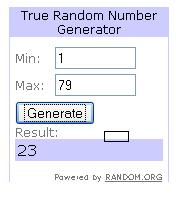 Purex Complete Crystals Winner