
-
Affiliates
Our Favourite Family Board Games That Don’t Take Forever
Family game night sounds lovely in theory, but real life rarely leaves room for a three-hour strategy marathon. Between school bags, homework, dinner, baths and the search for missing socks, we need board games that can be set up quickly and finished before everyone starts getting grumpy.
At our house, the best games are easy to explain, entertaining for adults and children, and short enough to fit into an ordinary weekday. A great family board game gives us time together without making the evening feel like another task on the list.
Why Short Games Work For Family Life
A game that takes 20 to 40 minutes is much easier to bring out after dinner. Nobody has to commit the whole evening, and younger children can usually stay focused until the final turn. If the game finishes while everyone is still having fun, we can always play again.
Short games are especially useful during busy Australian weeks. Between school activities, weekend sport and the occasional rainy arvo stuck indoors, a quick round can turn spare time into proper family time. It also works well during school holidays when the children are ready for entertainment but the adults need a quiet moment.
Our Favourite Cooperative Games
Cooperative games are a reliable choice when competition is likely to cause arguments. Everyone works towards the same goal, so the children learn to plan, share ideas and celebrate a win together. There is still excitement, but nobody feels singled out for losing.
We enjoy games where players have to make decisions as a team, whether that means moving characters around a board, collecting matching items or completing a mission before time runs out. These games are also helpful when cousins or siblings have different ages and confidence levels, because older children can support younger players without taking over completely.
Quick Classics For Mixed Ages
Classic games still earn their place in our cupboard because the rules are familiar and the playing time is manageable. Connect Four, Guess Who?, Uno and a simple card game can usually be explained in minutes. They are excellent choices when someone says, “Can we play something?” but nobody has the patience to read a booklet of instructions.
We also like games with a little luck mixed into the strategy. Children can make sensible choices, while a lucky card or dice roll keeps adults from winning every time. That balance matters in a family with different ages and abilities, particularly when a younger child wants a genuine chance to beat Mum or Dad.
Games That Suit Younger Kids
For preschoolers and early primary school children, the best games have clear pictures, sturdy pieces and a small number of rules. Matching games, colour-based games and simple memory challenges are usually more successful than anything requiring lots of reading or complicated counting.
A short game also helps children practise taking turns without pushing their patience too far. We can finish one round, talk about what happened and decide whether to play again. Keeping the experience positive is more important than squeezing in another game, especially when bedtime is approaching.
Competitive Games Without Tears
Competition can be fun when the game has a predictable length and plenty of opportunities for players to recover. We look for games where one unlucky turn does not ruin the entire match. A child who falls behind should still have a realistic way to catch up.
It helps to establish the family rules before opening the box. We talk about playing fairly, handling pieces carefully and accepting that someone else may win. Some nights we keep score, while other times we simply play for the laughs. A small prize is unnecessary, although a choice of dessert can make a tournament feel special.
Games For Busy Weeknights
The most-used games in our home are the ones that can be unpacked and packed away without a major operation. If the board requires a huge table and dozens of tiny pieces, it is less likely to appear on a school night. Compact boxes and card-based games are much easier to keep accessible.
This is the same practical approach we take with meals when everyone is hungry and running late. Our breakfast ideas reflect the reality that family routines need to be workable, not picture-perfect. A quick board game follows the same rule: less preparation means more chance of actually enjoying it.
Choosing Games That Get Played
Buying a game because the packaging looks exciting is tempting, but the best choice depends on the people who will actually play it. Consider the children’s ages, reading ability, attention span and tolerance for losing. It is also worth checking the average playing time rather than relying on a vague claim such as “family fun.”
Before spending money, we often look for reviews, watch a short demonstration or see whether friends recommend the game. Australian families also know that board games can become expensive when buying online, so checking postage, local availability and sale periods at retailers can make a difference. A game found during a department-store sale or a visit to a local toy shop may be a better buy than an imported title with a surprising delivery cost.
Features Worth Looking For
- A playing time of about 15 to 45 minutes
- Rules that can be explained in less than ten minutes
- Durable cards, boards and pieces for regular family use
- A balance of luck and simple strategy
- A reset that takes only a few minutes
We keep new games in a low cupboard where the children can reach them, but the smallest pieces stay in labelled bags. That makes it easier to choose a game after dinner and less likely that an important token will disappear under the sofa. For birthdays and Christmas, we also keep an eye on family-friendly promotions and giveaway roundups, which can be a useful way to discover new products without paying full price.
Making Game Night Feel Special
A game night does not need themed decorations or a huge spread of snacks. Sometimes we put out popcorn, fruit or cheese and crackers, turn off the television and let everyone choose from two or three suitable games. Limiting the options prevents the familiar twenty-minute debate before play even begins.
The routine can be as simple as one game after dinner on Friday or a quick round on a Sunday afternoon. During hot weather, we may play inside with the fan going; during cooler months, a board game is an easy way to enjoy a quiet night at home instead of adding another outing to the budget.
The right game is the one that brings everyone to the table without making the evening harder. Choose a short favourite, clear a little space and start a family game night that fits real life.


 Durex House Party “He Said/She Said” Challenge [Giveaway]
![Durex House Party: Introducing the LOVE BOX [Giveaway]](/wp-content/uploads/HLIC/2ed7178346e419ad5c79280a7d5dd0aa.png) Durex House Party: Introducing the LOVE BOX [Giveaway]
Durex House Party: Introducing the LOVE BOX [Giveaway]
![Welcome to the Durex House Party [Giveaway]](/wp-content/uploads/HLIC/b3517de65f98905a68b0497aa5152005.png) Welcome to the Durex House Party [Giveaway]
Welcome to the Durex House Party [Giveaway]
 Nursing Scrubs
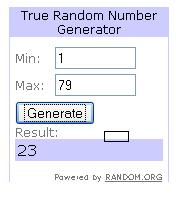 Purex Complete Crystals Winner