
-
Affiliates
How We Use Positive Discipline Without Yelling
Parenting can turn an ordinary morning into a full production. Someone cannot find a school shoe, someone else is upset about toast, and I am trying to get everyone out the door before the traffic builds. In those moments, yelling can feel like the quickest way to regain control.
It may stop the noise briefly, but it rarely teaches children what to do next. In our family, positive discipline means setting firm boundaries while treating the children with respect. It is less about being endlessly calm and more about having practical tools ready for the messy moments.
This approach has changed the way we handle tantrums, sibling arguments, forgotten jobs and big feelings. We still have hard days, and I still get frustrated. The difference is that we aim to guide behaviour instead of using fear, shame or a loud voice as our main parenting strategy.
There is no perfect script, especially when family life includes school drop-off, work deadlines, sport, homework and the Australian heat. These are the strategies that have helped us create calmer routines and more cooperation without expecting children to behave like miniature adults.
We start with connection
Before correcting behaviour, I try to work out what is happening underneath it. A child who is rude at the end of a long school day may be hungry, tired, overstimulated or carrying a problem from the playground. That does not make disrespect acceptable, but it gives me useful information.
I might get down to their level and say, “You are really upset because it is time to leave.” Naming the feeling does not mean agreeing with every demand. It shows that I have heard them, which often lowers the temperature enough for us to talk about the boundary.
Connection can be as simple as a cuddle, a glass of water or a few quiet seconds together. On a hot afternoon after swimming lessons or a busy arvo of errands, that small pause can prevent a minor frustration from becoming a full family meltdown.
We keep boundaries clear
Positive parenting is not permissive parenting. Our children still have rules about safety, kindness, screens, bedtime and helping around the house. The goal is to communicate those expectations without turning every correction into a lecture.
Short instructions work best. “Hands are for helping, not hitting” is clearer than a long explanation delivered while everyone is upset. I also try to say what the child can do: “You can stomp your feet on the floor, but you cannot kick your brother.”
Natural and logical consequences are part of our discipline strategy. If a toy is being used to hurt someone, it is put away for a while. If a child refuses to pack a school bag, the morning may feel rushed. The consequence connects to the choice rather than being an unrelated punishment.
We offer choices within limits
Children often resist because they want some control over their day. Giving limited choices can reduce power struggles while keeping the adult boundary intact. “Do you want to put your pyjamas on before or after brushing your teeth?” gives them a say without changing the bedtime routine.
I use this approach for everyday tasks such as getting dressed, tidying up and leaving the playground. “Would you like to walk to the car or hold my hand?” is more effective than repeating, “Come on, we are leaving,” until my voice gets louder.
Choices need to be genuine and manageable. Offering ten options when everyone is late for school only adds confusion. Two acceptable choices are usually enough, and I calmly follow through when the child chooses neither.
We turn everyday tasks into practice
Discipline becomes easier when children have regular opportunities to practise responsibility outside moments of conflict. Chores, shopping and family routines teach patience, problem-solving and cooperation before those skills are needed during a difficult situation.
A supermarket trip can become a lesson in budgeting, reading labels and making decisions rather than a battle over every packet. We have used ideas from our grocery learning activity to involve the children and give them a useful role while we shop at Coles or Woolworths.
Small responsibilities also build confidence. A child can match socks, place recycling in the right bin or help prepare vegetables for dinner. The work may take longer, but participation helps children see themselves as capable members of the family.
We use calm words during big feelings
When a child is melting down, reasoning usually has limited value. I focus first on safety and simplicity. “I will stay with you. I will not let you hit.” Then I wait, breathe slowly and avoid adding a stream of questions.
I do not demand an apology while emotions are still high. Once everyone is calm, we talk about what happened, who was affected and how to repair it. Repair might involve checking on a sibling, helping rebuild a knocked-over tower or trying the conversation again respectfully.
This is where I have had to manage my own reactions. Taking a breath, lowering my voice or stepping away for a moment is not ignoring the child. It is modelling emotional regulation, which is a skill children learn through repeated experience.
We prepare for predictable trouble
Some behaviour problems happen at the same time every day. Hunger before dinner, tiredness after school and arguments over devices are predictable in our home. Preparing for those patterns makes positive discipline more realistic.
We keep simple snacks available, give warnings before transitions and use visual reminders for routines. Before screen time ends, I provide a five-minute warning and then a two-minute warning. The children may still complain, but the change is less sudden.
Family outings can also provide useful practice. At a local festival, there may be crowds, noise, queues and tempting food stalls. Our experience of taking the kids to a festival reminded me to plan breaks, explain expectations beforehand and accept that tired children need support rather than criticism.
We repair after we get it wrong
Positive discipline does not mean I never raise my voice. Sometimes I am overwhelmed, late or dealing with several competing needs. When I do yell, I try to return to the situation and take responsibility without making the children comfort me.
I might say, “I was frustrated, but yelling was not the right way to speak. I am sorry. Next time I will take a breath and try again.” This does not remove my authority. It shows that adults are accountable too.
The comparison below reflects the shift we are working towards in ordinary family situations:
| Difficult moment | Yelling-based reaction | Positive discipline response |
|---|---|---|
| A child refuses to leave the park | Threaten and shout | Give a clear warning, offer two choices and follow through |
| Siblings are arguing | Demand silence | Separate them if needed, name the boundary and help them repair |
| A child breaks a rule | Use shame or a large punishment | Apply a related consequence and discuss the next choice |
| A child is having a tantrum | Argue over every detail | Keep everyone safe, stay nearby and talk later |
| A parent loses patience | Pretend nothing happened | Apologise, reconnect and model self-correction |
The aim is progress, not a perfectly peaceful household. Children will test limits, forget routines and have emotional days. I will have those days too. What matters is that our family has ways to reset and keep learning.
Positive discipline has helped us replace some shouting with clear limits, empathy and follow-through. It takes practice, especially during a rushed school morning or a long day in the city, but the payoff is a home where everyone can be heard.
Save these strategies for the next tricky family moment, choose one to practise this week, and share the approach with another parent who is looking for calmer ways to guide their children.


 Durex House Party “He Said/She Said” Challenge [Giveaway]
![Durex House Party: Introducing the LOVE BOX [Giveaway]](/wp-content/uploads/HLIC/2ed7178346e419ad5c79280a7d5dd0aa.png) Durex House Party: Introducing the LOVE BOX [Giveaway]
Durex House Party: Introducing the LOVE BOX [Giveaway]
![Welcome to the Durex House Party [Giveaway]](/wp-content/uploads/HLIC/b3517de65f98905a68b0497aa5152005.png) Welcome to the Durex House Party [Giveaway]
Welcome to the Durex House Party [Giveaway]
 Nursing Scrubs
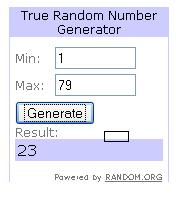 Purex Complete Crystals Winner