
-
Affiliates
Turning Doctor Visit Fear Into Brave Little Rewards
The car park outside our local clinic was where the panic used to start. Not the waiting room, not the stethoscope, but the five minutes of engine noise while I tried to remember why we were there. My youngest would go quiet, and quiet worried me more than tears, because it meant he was holding it all in.
We live about an hour out of Melbourne in a regional Victorian town, so most appointments happen at a bulk-billed practice on the main street. Medicare covers the visit, slots are tight fifteen-minute ones, and the rule is one problem per appointment. When it got complicated, we left with a referral to a paediatrician and a new waiting room to be anxious in.
For years I treated that fear as something to survive rather than something to teach. Then we built a points system, and the change was immediate. He stopped hiding behind me at the door and started asking the receptionist what the stickers were worth.
The system is simple. Points go on a chart on the fridge, points earn small privileges through the week, and a bigger prize arrives at the end of it. What it is not matters just as much: not a treat for every hard thing, and not a bribe dressed up as a reward.
Why the waiting room makes everything worse
The fear is rarely about the injection. It is about not knowing what comes next and about sounds that make no sense yet: the click of the ear thermometer, the paper sleeve, a stranger screaming two doors down. A child with no idea what comes next assumes the worst version of it.
We stopped promising him that the doctor was nice and nothing would hurt. That promise always breaks, and a broken promise teaches a kid to distrust the white coat. Instead we named it out loud: you are worried about the part you cannot see.
The other half of the problem was mine. Winding up before we walked in meant he picked up my nerves and decided the whole appointment was my fault.
Naming the fear at the kitchen table
We role-played. The clinic hands out a toy blood-pressure cuff in the kids' basket, and he became the doctor, pressing it on my knee and diagnosing a silly knee. Giving him control of the order of events filled the gap where the worry usually lived.
Then we rehearsed the real script: sit on the chair, arm on the table, the nurse presses something cold on your arm, the doctor shines a light in your ears, and if there is a jab you get three deep breaths first.
We keep Healthdirect's number on the fridge, 1800 022 222. When the clinic was shut and his temperature was climbing at midnight, a nurse on that line gave me advice instead of a panic spiral.
Packing a brave bag the night before
Everything goes in one bag the night before: the comfort toy, headphones, an activity book, a snack, a spare top, a whiteboard for drawing while we wait.
The practical things live there too. If a jab is likely, numbing cream from the chemist has to go on an hour beforehand, which is the detail you forget when distracted. Scripts get filled at the chemist for the PBS medication, so we keep the paper ready for the counter.
Before we head out, I top up nappies and wipes with homemade baby wipes, because clinic prices for a tiny pack are steep and ours are good enough for any waiting room.
Points your child actually values
The system works best when points are frequent and the prizes are chosen by him. Long gaps between a reward and the brave thing just teach waiting.
Our chart lives on the fridge with a star for asking a question, a star for sitting still, and a star for the deep breaths before the jab. Some days it is a single star. On a good day he came out with four and chose the audiobook for the drive home.
End-of-week prizes come from a shallow drawer: stickers, a new chart colour, picking dinner, an extra episode. I keep a jar of coins too, and when it fills up he spends it on something bigger.
When a visit goes sideways
Some visits are simply bad: a crowded waiting room, a doctor running late, and a child who has chosen today for a full-floor tantrum. We reward the effort, not the outcome, and the chart still gets a star if he tried.
A chart with half-stars proves the system works, because the alternative is a chart that is either perfect or useless. Counting them in the car usually defuses the drive home.
Rescheduling is no failure either. Our GP usually fits us in within days, and when it is urgent Healthdirect or an after-hours service points us the right way.
Rewards for the grown-ups too
I used to think rewards were only for children, until I noticed the adult doing the emotional heavy lifting in the car park needed something to look forward to. Now there is a grown-up prize: a flat white on the way home, a new podcast for the drive, ten quiet minutes once the chart is up.
Freebies help too. I keep an eye on the Giveaway Corral for bundled things worth having on hand, and those become prize-drawer fillers or clinic-bag distractions.
Starting with one chart on the fridge
Pick one thing to change this week. Write down three brave things your child can earn a star for, find a pen for the fridge, and leave the reward drawer open for the next visit. It does not have to be pretty or posted anywhere to count.
If it works, the reward eventually moves from me to him, and the goal gets quieter: not a child who never fears the doctor, but a child who can say what he is scared of and has a plan for it.
I will write more about the points system, what helps in the waiting room and the days it all falls apart, so subscribe if you want to follow along. Tell me in the comments what your kid's brave win was this week.


 Durex House Party “He Said/She Said” Challenge [Giveaway]
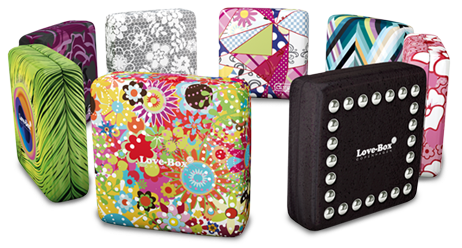 Durex House Party: Introducing the LOVE BOX [Giveaway]
 Welcome to the Durex House Party [Giveaway]
 Nursing Scrubs
 Purex Complete Crystals Winner