
-
Affiliates
What Works When Both Kids Are Equally Upset in a Sibling Fight
Most days in our house start with cereal and end with someone in tears. Somewhere in between, my two kids manage to argue about everything from who gets the blue cup to whose turn it is to press the button on the lift. When both children are equally worked up, the usual parenting scripts stop working. You can't just send one to the naughty corner, because neither one thinks they started it.
Over the years I have worked out that the loudest arguments are rarely about the toy, the seat, or the last biscuit. They are about feeling unheard. I have tried a few approaches since the kids were small, and a handful have actually stuck. These are the strategies that help us in our house on a Tuesday afternoon in Brisbane, and they might help you too.
Why Equal Anger Makes Things Harder
When one child is clearly the aggressor and the other is the victim, parenting almost feels easy. You separate them, comfort the hurt one, and address the behaviour of the other. The trouble starts when both kids are shouting, both are red in the face, and both have a story that sounds plausible. In those moments, taking sides feels unfair, and doing nothing feels like neglect.
I have learned that my instinct to find a culprit is usually the wrong move. Kids are quick learners. If I always decide who is right, they stop trying to sort things out themselves and start waiting for the verdict. That is not what I want for them at school, at a mate's house, or later on at a job in Melbourne or Perth.
Another thing that makes it harder is that emotions are contagious. By the time I walk into the room, my own heart rate is already up because I have been listening to the noise from the kitchen. A calm response is almost impossible if I have not given myself a moment first. A few deep breaths, a sip of cold tea, and a reminder that this is normal sibling stuff can buy me enough time to be the adult in the room.
Stepping Back Before Stepping In
The first real shift for us was learning not to rush in. I used to hear the first raised voice and bolt to wherever the action was. Now I take about thirty seconds, just long enough to hear the tone, before I open the door. If it is a bickering match, I let it run. If it has tipped into something physical or cruel, I step in straight away.
I also try to lower myself to their level. Standing over two wailing kids in a hallway is not a great look, and it almost guarantees that one of them will start crying harder because I am towering over them. Sitting on the floor next to them, even on the tiles in front of the aircon, changes the energy. They feel like I am on their team, not there to deliver a sentence.
I resist the urge to ask what happened straight away, because both of them will answer at once and the chaos doubles. Instead I name what I can see. You both look really frustrated. I can see you are both upset. That single sentence often slows things down, because no one is being accused. You would be surprised how many fights lose steam once a child feels seen. I picked up a similar idea from a post over on diary of a sahm and adapted it for our crew.
The Pause and Reset Strategy
Once everyone is a fraction calmer, I separate them. Not as a punishment, but as a reset. One child might go to their room, the other might help me fold the washing or set the table. The idea is to break the loop and let the cortisol settle. I have a rough rule of one minute per year of age, so a seven minute cool-off for my seven year old, and ten for my ten year old.
During the cool-off I do not interrogate them. I do not ask who hit who or who started it. I might say come and find me when you feel ready to talk. That gives them ownership of the moment, and it often means they come back softer, sometimes with a small idea of how to fix it themselves.
A simple thing that helps is a calm-down corner. We have a little cushion in the study with a few books and a jar of sensory stuff. It is not the naughty step, and I am careful not to send them there when they are furious. It is a place to go when they are starting to feel the heat but before everything boils over. I sometimes mention it earlier in the day, like before a playdate or before we head to Bunnings on a Saturday, so it feels like a normal tool and not a sentence.
Teaching Repair Instead of Punishment
Punishment teaches kids to hide what they did. Repair teaches them to fix it. After a big blow up, I sit with each child on their own first, just to check in. I ask how they are feeling now, and I listen. I do not push for the story of the fight yet. Once they are calm, I bring them together and we work out what each of them needs.
Sometimes the repair is an apology. Sometimes it is giving up a turn, or helping the other one rebuild a tower. Once my daughter broke a sandcastle at the local beach and the fix was helping her brother start a new one with the bucket from Woolworths. He felt better, she felt useful, and I felt like the day was not a total write-off.
I also try to avoid forcing a verbal sorry if they are not feeling it. A scripted sorry teaches nothing. A genuine one, even a stiff one with a hug, is worth a hundred of the robotic version. If they cannot get there yet, we come back to it later that evening, once dinner is done and the heat of the day has gone.
When the Same Fight Keeps Happening
Some arguments feel like reruns. The toy of the week, the chair at the dinner table, the front seat in the car on the way to school. If I notice the same pattern week after week, I treat it as a systems problem, not a behaviour problem. Maybe the toy needs a roster. Maybe the kids need clearer turn-taking rules. Maybe I am expecting them to share a space that is just too small for two strong personalities.
I have also started a little weekly chat with each child on their own. Five minutes, no screens, nothing fancy. I ask about the best bit of their week and the worst bit. A lot of the worst bits are about their sibling. That is where I learn the real story, and where I can quietly coach them through what to try next time.
When the pattern feels bigger than what I can handle, I have reached out to our GP and to a local family counsellor. There is no medal for parenting through it alone, and asking for help is one of the best things I have done for our family. If you are in the same spot, a good place to start is your child and family health centre or a service like Parentline, which operates across most states.
One last thought. When the kids are finally asleep and the house is quiet, I sometimes scroll through my own phone for a few minutes of downtime. I ended up reading about puntate-roulette-americana on our site the other night, and it was a welcome distraction on a rough day. The point is, you do not have to be a perfect referee. You just have to keep showing up, calm and curious, and trust that the small moments add up. If this resonated, I would love to hear how you handle the big feelings in your house. Drop a comment below, share it with a parent friend who needs it on the weekend, and bookmark the page for the next time two small people are losing it at 5pm.


 Durex House Party “He Said/She Said” Challenge [Giveaway]
![Durex House Party: Introducing the LOVE BOX [Giveaway]](/wp-content/uploads/HLIC/2ed7178346e419ad5c79280a7d5dd0aa.png) Durex House Party: Introducing the LOVE BOX [Giveaway]
Durex House Party: Introducing the LOVE BOX [Giveaway]
![Welcome to the Durex House Party [Giveaway]](/wp-content/uploads/HLIC/b3517de65f98905a68b0497aa5152005.png) Welcome to the Durex House Party [Giveaway]
Welcome to the Durex House Party [Giveaway]
 Nursing Scrubs
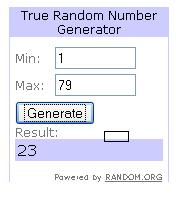 Purex Complete Crystals Winner