
-
Affiliates
How We Talk About Families With Two Mums Or Two Dads
Children notice that families can look different from their own. They may see two mums at school pick-up, hear about a classmate with two dads, or spot rainbow families at a community event. Their questions are usually straightforward and genuine, so our answers should be calm, truthful and easy to understand.
In our family, we explain that families are built through love, care and commitment. Some children live with a mum and dad, some with one parent, some with grandparents, and some with two mums or two dads. The important part is that the adults in the family look after the children and help them feel safe.
We also try to keep the conversation age-appropriate. A preschooler may only need a simple explanation about who lives together, while an older child might ask about birth, adoption, donors or why some people use different words for their families. There is no need to provide every detail at once.
| Family structure | Simple explanation for children | Helpful focus |
|---|---|---|
| Mum and dad | “Some families have a mum and a dad who care for their children.” | Every family is different |
| Two mums | “Some children have two mums who love and care for them.” | Love, safety and belonging |
| Two dads | “Some children have two dads who raise them together.” | Parents can have different family roles |
| One parent | “Some children live with one parent who looks after them.” | Families can change and remain loving |
| Grandparents or carers | “Some children are cared for by grandparents or other grown-ups.” | The people who provide care matter |
Start With Love And Everyday Care
Young children understand family through daily routines. They know who makes breakfast, checks their school bag, reads bedtime stories and gives cuddles after a rough day. This makes practical language more useful than a lengthy explanation about adult relationships.
We might say, “A family is the people who love you, care for you and help you grow. Some families have two mums, and some have two dads.” If a child asks whether that is allowed, we can explain that families are formed in different ways and that Australian families come in many shapes.
It helps to use the same warm tone we would use when explaining blended families, foster care or a single-parent household. Treating the subject as ordinary signals that there is nothing strange or shameful about having two mothers or two fathers.
Answer The Question They Actually Asked
Children often ask one small question at a time. If a four-year-old asks, “Where is their dad?” the answer can be as simple as, “That child has two mums, and both of them are their parents.” We do not need to give a biology lesson unless the child is asking about how babies are born.
Older children may ask, “How can two men have a baby?” We can explain that families may grow through adoption, fostering, surrogacy or donor conception, using words they can understand. “A doctor and another person helped, and then the dads became the baby’s parents” may be enough for the moment.
Using accurate terms matters. Words such as parent, biological parent, birth parent, donor, adoptive parent and carer can be introduced gradually. Children benefit from knowing that different routes into family life are real and valid.
Use Books, Television And Real Life
Books are a gentle way to show children that two-mum and two-dad families belong in ordinary stories. We can look for Australian library books, school reading lists and age-appropriate picture books rather than waiting for a child to encounter the topic through a confusing news story or playground comment.
A family story resource such as family story ideas can also help parents find natural ways to talk about belonging, relationships and different home lives. Reading together gives children time to pause, notice illustrations and raise questions without feeling as though they are being tested.
Television and films create similar opportunities. If a program shows a family with two dads, we can simply say, “They are raising their child together.” During Book Week at an Australian primary school, children may bring stories featuring all kinds of families, making inclusion part of normal classroom conversation.
Explain That Fairness Includes Everyone
Children sometimes repeat comments they have heard from friends, relatives or online videos. If someone says that two mums or two dads are “not a real family”, we can respond firmly: “That is unkind and incorrect. A real family is made up of people who care for one another.”
This is also a chance to explain fairness and respect. In Australia, schools may discuss inclusion during Harmony Week, while communities such as Sydney’s inner west and Melbourne’s Fitzroy often provide visible examples of diverse families and relationships. Children should learn that respect applies at school, in sport, at childcare and in the neighbourhood.
We can separate curiosity from cruelty. It is fine to wonder how another family works, but it is not fine to tease, exclude or interrogate someone. A child does not have to answer personal questions about their parents, and they can seek help from a teacher if classmates are being hurtful.
Keep Family Language Flexible
Families may use different names for parents, such as Mum, Mama, Mummy, Dad, Daddy or a first name. Some children have a stepmum, a bonus dad, two mothers with different roles, or parents who live in separate homes. Rather than insisting that every family fit one pattern, we can let each household describe itself.
Everyday events can prompt useful conversations. Around Valentine’s Day, for example, children might make cards for the adults who care for them, rather than assuming every child has a mum and a dad to celebrate. A simple activity like choosing thoughtful words for loved ones connects with the ideas in this Valentine’s Day family post while leaving room for different family arrangements.
It is helpful to check the language used on school forms, birthday invitations and sports registrations too. If a form says “mother” and “father”, families may need broader options such as parent one and parent two. Small changes can make children feel recognised before they have to explain themselves.
Let Children Grow Into Understanding
There is no single conversation that settles every question. A child may accept the answer one day and ask the same thing again months later. Repetition is normal, especially as their understanding of relationships, birth and identity develops.
We can avoid making assumptions about a family based on appearance. Two adults who look like friends may be parents, while a child’s mother or father may not be present at a school event. Listening to how people describe themselves is a simple form of respect.
The goal is not to make children memorise labels. It is to help them understand that love, responsibility and belonging can exist in many family structures. When parents speak openly and kindly, children are more likely to welcome classmates, stand up to unkindness and feel secure in their own family story.
Use everyday moments—story time, school conversations and family celebrations—to show children that two mums, two dads and many other family arrangements are part of the community around them. Our words can make home, classroom and playground spaces safer for every child.


 Durex House Party “He Said/She Said” Challenge [Giveaway]
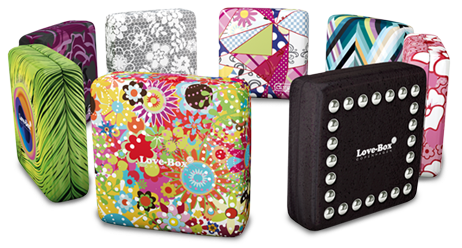 Durex House Party: Introducing the LOVE BOX [Giveaway]
 Welcome to the Durex House Party [Giveaway]
 Nursing Scrubs
 Purex Complete Crystals Winner